
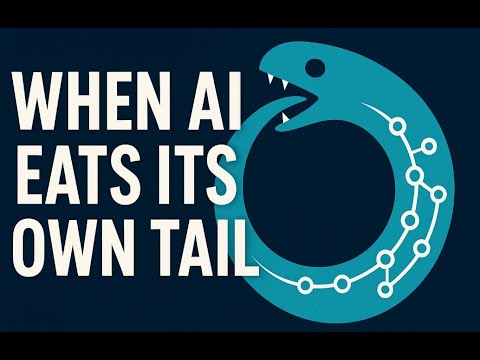
The ancient Greeks had a word for it: ouroboros — a serpent consuming its own tail. It symbolised eternity, self-renewal, and circularity. As Jaspreet Bindra, Cofounder of AI&Beyond, observes in his sharp new analysis for the Economic Times, there may be no better image for the strange new economics of the AI boom Circular Capitalism — a system that is beginning to look less like an industry and more like a self-devouring loop.
At the centre of this loop is what Bindra calls Circular Capitalism. Here’s how it works: Google invests tens of billions into Anthropic, maker of Claude. Anthropic immediately hands a significant chunk of that money back to Google — to pay for the cloud compute it needs to train its models. Microsoft invests in OpenAI; OpenAI buys Azure compute from Microsoft. Nvidia takes investments from AI labs and supplies the very chips those labs need to survive. Money leaves one pocket, returns through another, and everyone reports massive cloud revenue growth along the way.
Bindra’s take: “In the AI world, competitors invest in each other, sell to each other, buy from each other, host each other, and then announce victory over each other. It represents a new financial architecture — Circular Capitalism.”
The question Bindra raises — and it’s an uncomfortable one — is whether this circular architecture creates real value or merely the appearance of value. When the same dollar travels from investor to startup to cloud provider and back, revenues look spectacular. Valuations soar. Wall Street cheers. But does genuine economic output grow proportionately? The IMF, he notes, has already warned that circular AI financing risks inflating revenues and valuations while deepening interdependence among a remarkably small set of powerful firms.
This is not entirely new. Bindra draws a pointed parallel to the late-1990s telecom bubble, when equipment makers like Lucent and Nortel extended vendor financing to telecom operators, who then used that money to buy back from the same suppliers. Sales boomed — until customers failed and the circular magic turned into circular pain.
And yet, Bindra’s analysis is not simply a warning. He offers a second reading of the ouroboros: it can also mean renewal. The AI boom’s circular deals are simultaneously building the infrastructure, models, and applications the next technological age will need. The real demand is there — people are using ChatGPT, Claude, and Gemini every day. Enterprises are rebuilding workflows. Developers are producing software differently. The question is whether valuations and the financing structures supporting them have raced too far ahead of that demand.
The bigger risk, as Bindra frames it, is not fraud — these deals are not necessarily fraudulent. It is opacity. It is sometimes hard to know where genuine customer demand ends and financial engineering begins. And when the music stops, as it did in telecom, the serpent may discover, too late, that it has swallowed itself whole.
The AI boom is real. The technology is transformative. But as Jaspreet Bindra asks with characteristic clarity: is the snake eating its tail for energy — or for survival?