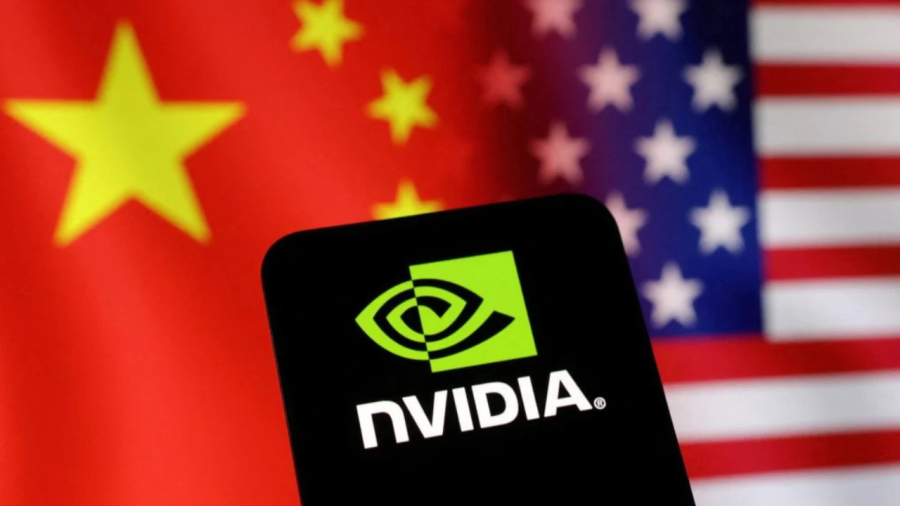
The Nvidia crisis has moved faster than almost any corporate story this year. In less than a week, Jensen Huang acknowledged an extramarital relationship with a Chinese businesswoman whom US officials reportedly suspect of intelligence links, Nvidia’s board ordered an independent review, and on 12 November the company announced his resignation after 33 years at the helm. Chief financial officer Colette Kress is now interim CEO.
For Jaspreet Bindra, founder and CEO of AI&Beyond, the personal scandal is not the real story. In a column published on 11 November, a day before the resignation was announced, he argued that the Nvidia crisis is really a stress test of three things at once: corporate governance, national security and the geopolitics of technology. This piece unpacks his argument and why it matters to anyone following the US-China AI cold war.
Why the Nvidia crisis is bigger than one CEO
Bindra starts from Nvidia’s place in the AI economy. Its chips are the base layer on which most advanced AI is trained and run, and the company is estimated to hold about 90% of the market for high-end AI data-centre GPUs. When the person leading a company that central becomes a national-security question, the fallout cannot stay inside the boardroom.
He is equally careful about what is not yet known. The allegations are still under investigation. Nvidia has said it has no reason to believe national security or company secrets were compromised, and Beijing has dismissed the espionage claims as unsubstantiated. Bindra’s position is that the facts must be established before anyone draws conclusions about Huang or about Nvidia.
Washington’s China debate just lost its loudest moderate
For years, Huang was the most visible advocate for letting Nvidia sell more to China. His reasoning was both commercial and strategic: shut China out of the American technology stack and you only speed up the rise of Chinese alternatives.
Bindra’s reading is that this argument has become far harder to make. Washington already treats advanced chips as strategic assets, not ordinary products. With allegations that restricted chips found their way to Chinese buyers, he expects the pressure to run in one direction: tighter export controls, better traceability of where chips end up, and closer scrutiny of who is buying them.
That would reverse a recent thaw. The US has barred sales of Nvidia’s most advanced chips to China since 2022, but in 2025 it began approving some chips, including the H20 and later the H200, case by case.
What the Nvidia crisis means for the US-China AI cold war
This is where Bindra’s view is most useful, because he rejects the easy story that tougher controls equal an American win.
| Who | Bindra’s view |
|---|---|
| Nvidia | The main risks are regulatory and commercial: reduced access to a major market, strained relationships with overseas cloud providers and nervous customers. |
| China | Restrictions can slow a rival, but they also hand local chipmakers a stronger motive and a larger home market. Semiconductor self-reliance stays the goal. |
| United States | It holds real advantages across the AI stack, but policies that shrink the global reach of its own companies may carry long-term costs. |
He also notes that curbs on leading-edge chips have not stopped China’s AI development so far, and that the contest is far wider than chips. It runs through software, talent, data, energy, manufacturing and entire ecosystems.
Chinese analysts are making a similar point. Fudan University’s Wu Xinbo has said tighter curbs would strengthen the camp pushing domestic alternatives, to the benefit of players such as Huawei. Nanjing University’s Zhu Feng cautions that China still cannot match Nvidia, TSMC or SK Hynix in the short term.
Bindra’s forecast is measured. The episode may not settle the chip race, but it could change who is running it, moving the contest away from company rivalry and towards governments and alliances. Put simply, the US-China AI cold war becomes less about market share and more about statecraft.
The boardroom lesson: key-person risk
The second half of Bindra’s argument is about governance, and it applies well beyond Silicon Valley. At Nvidia, one executive was at once the chief strategist, the public face and the go-between with governments. In that setup, he writes, “personal risk can become institutional risk.”
His prescription has four parts:
- Strong boards
- Transparent internal controls
- A real succession plan
- A clear separation between commercial lobbying and national-security work
Events have underlined the point. Fortune reported that Nvidia had no chief operating officer and that Huang had about 60 direct reports. The day after Bindra’s column appeared, Nvidia announced Huang’s exit, named an interim CEO and appointed the first board chair in its history.
What Indian leaders should take from it
Bindra’s column does not address India directly, but his lens fits. Nvidia chips reportedly account for more than 85% of the shared compute built under the IndiaAI Mission. If AI infrastructure is now treated as a national-security asset, then compute supply is a strategic dependency, and concentration risk belongs on the board agenda next to cyber and regulatory risk. The same goes for key-person risk in founder-led Indian companies.
Key takeaways from Jaspreet Bindra
- The Nvidia crisis tests governance, national security and tech geopolitics together.
- Huang’s case for selling more to China is now much harder to argue.
- Expect tighter export controls, chip tracking and customer scrutiny.
- Controls cut both ways: they slow China and also push it towards self-reliance.
- The race is shifting from companies to governments and alliances.
- Power concentrated in one leader is an institutional risk.
Bindra ends on a question, not a verdict: can the global AI industry stay interconnected once its most critical infrastructure is handled as a matter of national security? The Nvidia crisis will not answer that on its own. It has made sure that every government, board and AI buyer now has to ask it.