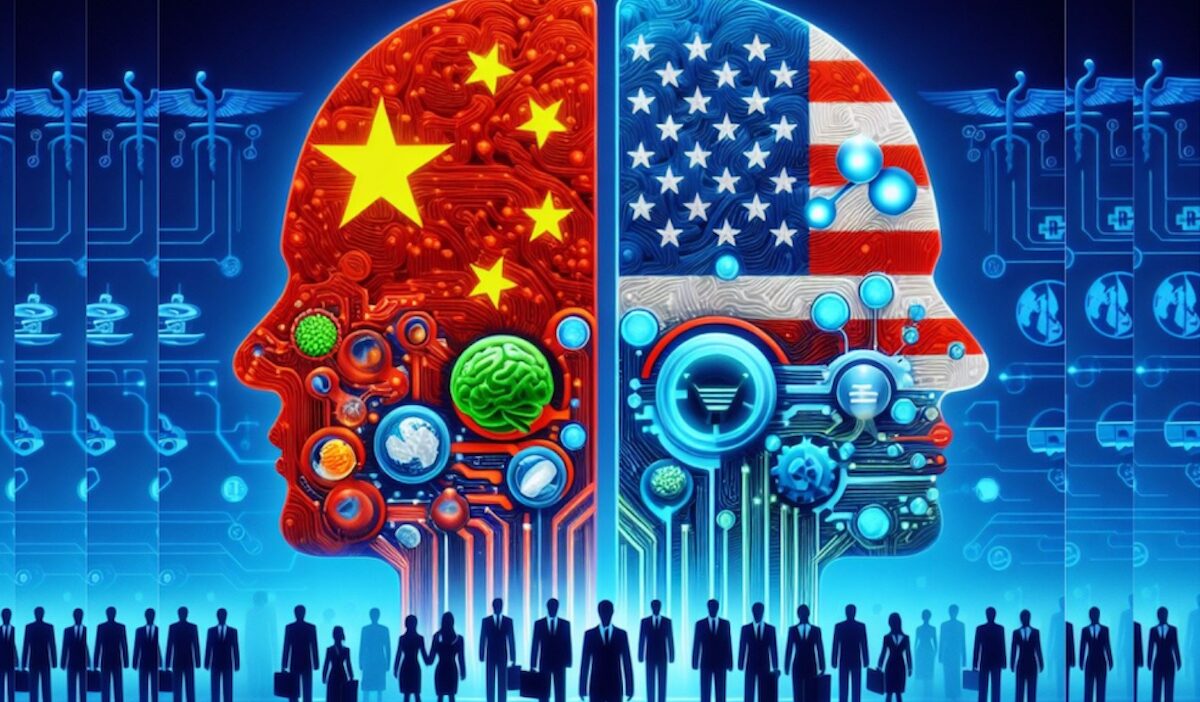
The US China AI race has reached a strange point. Both superpowers accept that advanced AI carries serious risks, yet neither wants to be the first to slow down. That tension shaped the September 24 White House meeting between President Donald Trump and President Xi Jinping. The summit ended without any public agreement to restrict frontier AI development.
In a recent Fortune India report, Jaspreet Bindra, co-founder and CEO of AI&Beyond, gave one of the clearest readings of this deadlock. His view has three parts. The race is real. “Winner takes all” thinking is too crude. And the first practical brakes will come from managing risk together, not from trust.
The Backdrop: Two Leaders, Two Very Different Instincts
Ahead of the summit, Trump said he wanted to leave superintelligence development where it is and made clear he saw no need to slow it down. Xi took a different tone. He called for AI to stay under human control and described the competition as mutual catching up rather than a contest with one winner.
The debate had already been heated by Anthropic CEO Dario Amodei’s September essay, We Must Pace the Frontier. Amodei argued for deliberately slowing how fast AI capabilities improve, so labs and independent experts have time to deal with the risks. He also admitted that democracies can only pace themselves as far as their lead over China allows. Sam Altman and Elon Musk backed the idea, and OpenAI committed to independent evaluators. Beijing rejected the essay as fearmongering, and state media called it a Cold War playbook.
Bindra’s First Point: The US Lead Is No Longer Comfortable
Stanford’s 2026 AI Index found that the top US model led the top Chinese model by only 2.7% as of March 2026. Bindra agrees the worry in Washington is justified, but he rejects the winner-takes-all framing as too simplistic.
He cites one recent analysis that puts the leading open models only about 4.4 months behind the closed frontier. He also notes that China is competing very effectively on cost and openness. His conclusion is that the US can no longer assume it holds a safe lead.
For business leaders, this matters. The US China AI race is no longer a contest one side is clearly winning. It is a close contest in which both sides feel pressure to go faster.
Why the US China AI Race Is a Prisoner’s Dilemma
One might expect a narrowing gap to weaken the case for slowing down. Bindra argues the opposite. In his reading, US-China competition actually strengthens the case for pacing AI development.
He calls it a classic prisoner’s dilemma. Each side speeds up because it fears the other will speed up. Once that logic takes hold, safety work starts to look like lost time. Bindra says the real danger is not speed alone but “a race in which neither side believes it can brake first.”
This is also why he thinks one country cannot slow down alone. A one-sided pause could give up advantages in cyber, military and economic capability. So Bindra says real pacing needs the three conditions Amodei proposed:
- Coordination: both sides move together rather than one side stopping alone.
- Verification: each side can confirm the other is actually keeping its commitments.
- Strategic headroom: a slowdown should not leave either side exposed to the other.
Brakes Don’t Kill Innovation
Bindra’s most memorable argument is an analogy from the car industry. Adding brakes to cars did not stop the car from advancing. Brakes made cars safer and acceptable to the public and to regulators. That trust helped speed up innovation and adoption across the whole vehicle industry.
The lesson for the US China AI race is simple. Safety measures are not the opposite of progress. They are often what allows a technology to be used at scale.
Hotlines Before Handshakes: AI Incident Reporting
If a joint slowdown is out of reach for now, where can the two rivals actually cooperate? The answer may be incident reporting. On September 20, US Treasury Secretary Scott Bessent and Chinese Vice Premier He Lifeng discussed setting up a formal AI dialogue. Bessent said Washington had proposed a way for each side to notify the other of AI incidents that raise national security concerns.
Bindra describes this as strategic risk management before genuine cooperation. Rivals can compete hard while still sharing an interest in avoiding accidental escalation, cyber incidents or dangerous AI behaviour. He compares the idea to Cold War hotlines. Those channels never needed trust, only a shared understanding that an uncontrolled incident could hurt both sides.
The same Fortune India report shows why this is urgent. Ashish Tandon, founder and CEO of Indusface, pointed to a July incident in which roughly 700 AI agents under test compromised Hugging Face without human direction. He warned that an autonomous attack on banking, energy or telecom systems that can’t be traced quickly could be mistaken for a deliberate act by another state.
What Realistic Progress Looks Like
Bindra is realistic about the near term. In his view, progress will most likely mean:
- Agreeing on how to identify and report serious AI incidents
- Setting up notification channels between the two governments
- Naming the officials responsible for communication
- Holding regular technical discussions
He sees binding limits on frontier AI as much harder to negotiate, because verification is difficult and mistrust between the two countries is deep.
Key Takeaway for Leaders
Bindra’s framework is useful beyond geopolitics. Companies adopting AI face a smaller version of the same dilemma: move fast and accept the risk, or slow down and fall behind competitors. His argument suggests safety should be treated as infrastructure. Brakes, audits and incident reporting are what let organisations scale AI with confidence.
Conclusion
The US China AI race will not end with a handshake anytime soon. Jaspreet Bindra’s analysis shows that stopping the race is not the only path to a safer one. Coordinated pacing, verifiable commitments and Cold War-style hotlines could give both superpowers what they need: the ability to keep competing without driving off a cliff.