
Archana Muthappa- News 18 Coverage
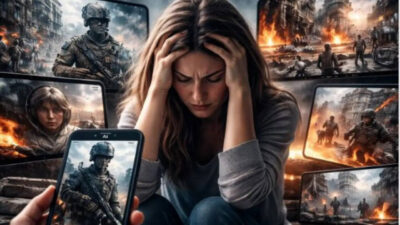
Every morning, millions of people wake up, reach for their phones, and within minutes are consuming footage of war zones — explosions, casualties, displacement. Some of it is real. A growing portion of it is not. And disturbingly, your brain cannot tell the difference.
This is the quiet mental health emergency that Archana Muthappa, Co-Founder & COO of AI&Beyond and a practicing Mental Health Counsellor, is sounding the alarm on — and her perspective, published recently in News18, deserves far more attention than it has received.
The Problem Is Not What You Think
Most conversations around AI-generated war content focus on misinformation — the political risk, the journalistic crisis, the election interference angle. But Archana reframes the threat entirely.
“This isn’t just information overload — it’s emotional overload,” she states.
That distinction is clinically significant. Information overload is a cognitive problem — too much data, not enough processing capacity. Emotional overload is a physiological problem. It activates the body’s stress response: cortisol spikes, the nervous system shifts into hypervigilance, sleep is disrupted, focus narrows. You don’t choose to feel it. It simply happens — repeatedly, every time you scroll.
The AI Amplification Effect
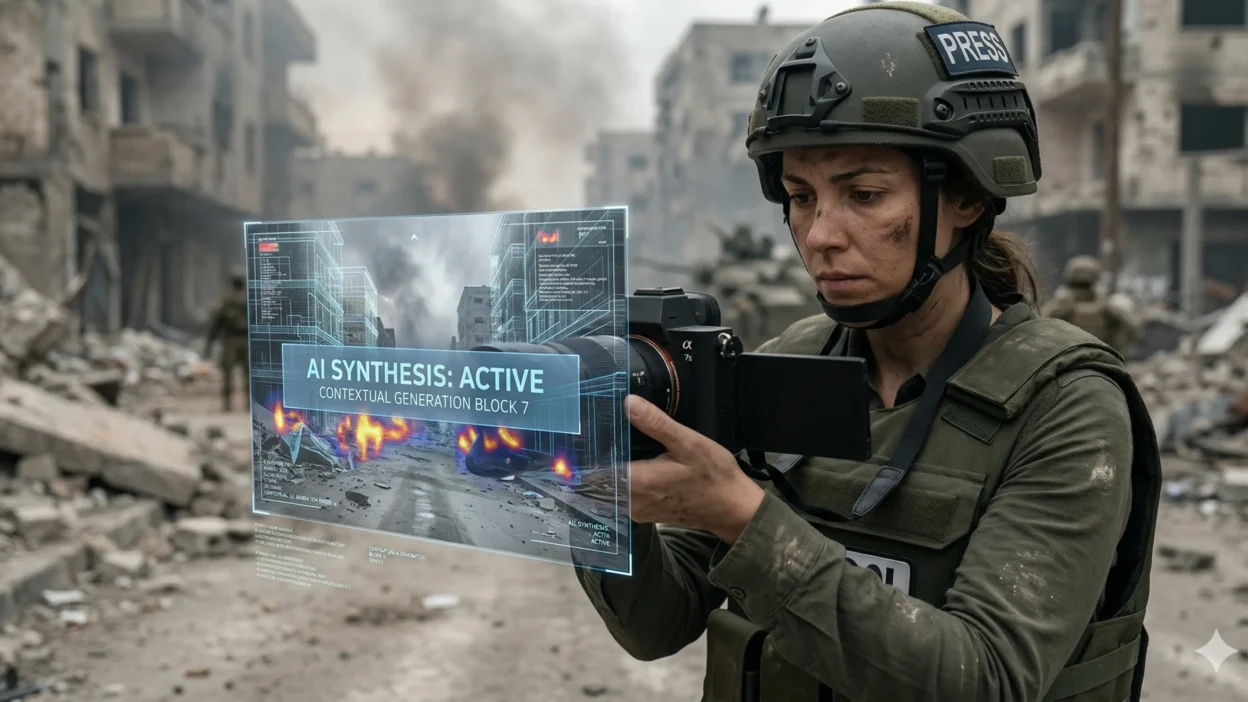
What makes this moment uniquely dangerous is the scale and realism that artificial intelligence brings to content production. AI systems can now generate war imagery, video narratives, and audio-visual reports that are functionally indistinguishable from verified journalism — at zero cost, at infinite volume.
Archana identifies this as the core threat: “Hyper-realistic visuals and narratives are making it increasingly difficult to distinguish fact from fabrication, creating a constant sense of uncertainty.”
That word — uncertainty — is the psychological operative. Human beings are hardwired to resolve uncertainty. When they cannot, the brain defaults to assuming the worst as a survival mechanism. Apply that loop dozens of times a day across war-themed content, and you have a population quietly accumulating what therapists call vicarious trauma — trauma symptoms without direct exposure to the traumatic event itself.
Who Is Most at Risk?
The populations most vulnerable are not just frontline journalists or geopolitical analysts consuming this content professionally. They are teenagers whose emotional regulation systems are still developing. They are parents trying to stay informed. They are working professionals absorbing conflict updates between Zoom calls, with no decompression time built in between.
The algorithm doesn’t know — or care — about your emotional bandwidth. It optimises for engagement. And fear, urgency, and moral outrage are among the highest-engagement emotions that exist.
The Solution Must Be Structural, Not Just Personal
Archana’s most important contribution to this conversation is refusing to reduce the solution to individual willpower. Yes, digital hygiene matters. Yes, limiting your news consumption hours helps. But she calls explicitly for “stronger digital awareness, responsible platform design, and regulatory guardrails.”
This is the voice of someone who understands AI infrastructure from the inside. As the Co-Founder of AI&Beyond, she is not a passive observer of the technology — she builds it. Which means when she calls for regulatory guardrails, she isn’t speaking from fear of the unknown. She’s speaking from intimate knowledge of what is already possible and where the unchecked trajectory leads.
What This Means for All of Us
The conversation around AI ethics has, for too long, lived inside boardrooms, policy papers, and academic journals. Archana Muthappa is doing the harder, more urgent work: translating that conversation into human terms — into the language of anxiety, grief, exhaustion, and eroded trust that millions of people are experiencing right now without a vocabulary to name it.
The war may be on the other side of a screen. But its psychological reach has no borders.
Read the original feature: “When War Feels Closer Than Ever: The Hidden Impact of AI-Generated War Content” — News18