

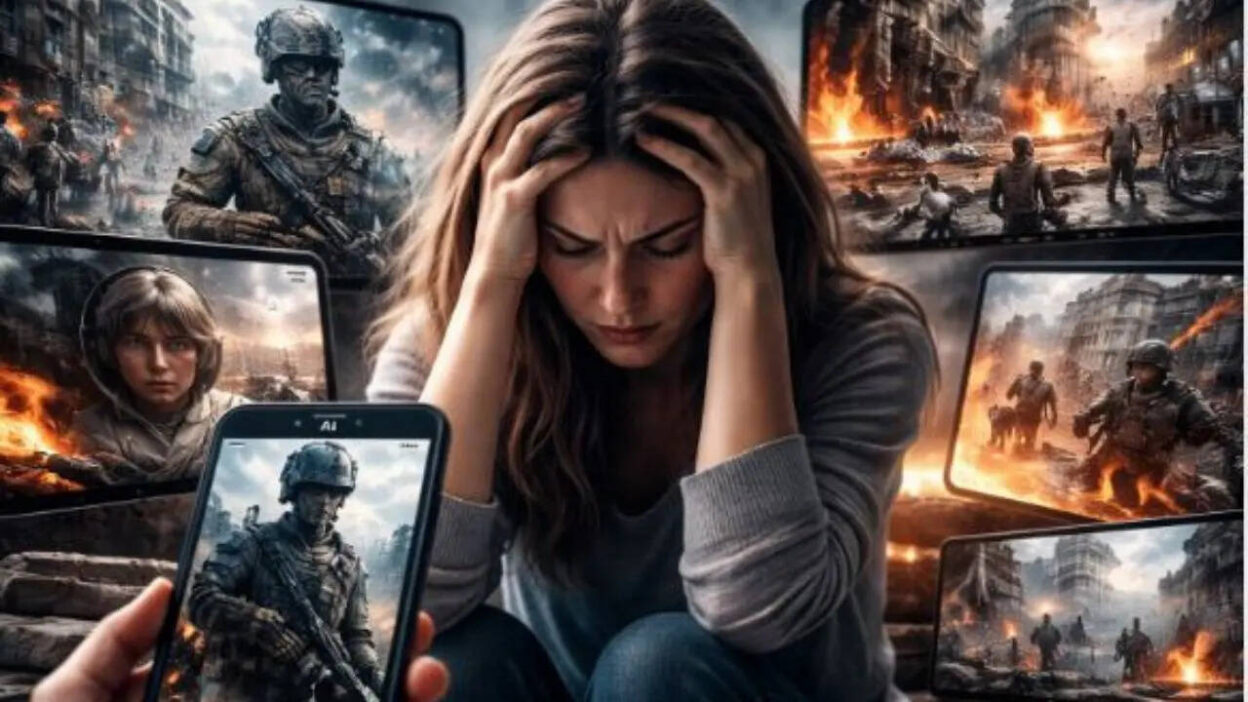
We scroll. We stop. We watch another AI-generated clip of missiles, rubble, and chaos — and we scroll again. According to Archana Muthappa, Co-founder and COO of AI&Beyond, this habit is no longer just a bad digital practice. It has become a full-blown mental health crisis.
What Archana Muthappa Is Warning Us About
As the Israel–Iran conflict continues to dominate global headlines, Archana points out something most of us overlook: it is not just the news we are consuming — it is AI-generated war content that is flooding our feeds at an unprecedented scale. In her view, “the relentless influx of AI-generated war content is reshaping our collective mental landscape” in ways that feel invisible but are deeply damaging.
Archana’s concern is rooted in a critical shift: AI can now produce hyper-realistic images, videos, and narratives of war within seconds. This means the volume, intensity, and emotional impact of war content has multiplied far beyond what human journalists could ever produce alone. For the average person scrolling through Instagram or X at midnight, the brain cannot always distinguish between real footage and AI fabrication — and that confusion is psychologically costly.
The Science Behind the Scroll
This is not just Archana’s opinion — science backs it up. Research published in Computers in Human Behavior Reports (August 2024) found that doomscrolling triggers existential anxiety, a deep, hard-to-shake feeling of dread about the world and one’s place in it. Harvard health experts further warn that doomscrolling creates “popcorn brain” — overstimulation that makes it nearly impossible to engage meaningfully with real life.
Physically, the damage is just as real. Prolonged doomscrolling has been linked to headaches, muscle tension, disrupted sleep, low appetite, and elevated blood pressure. The body enters a fight-or-flight state — and when war content keeps arriving in an endless loop, it never fully exits that state.
Why AI-Generated Content Makes It Worse
Traditional war journalism had natural limits — reporters on the ground, editorial gatekeeping, time constraints. AI removes all of those barriers. Archana’s core argument, aligned with her work at AI&Beyond, is that AI-generated content is not neutral — it is algorithmically designed to maximize engagement, which means maximizing emotional reaction. Fear, outrage, and grief keep people scrolling. Platforms profit. Users suffer.
Studies confirm that individuals who struggle with social isolation or emotional regulation are especially vulnerable to accepting AI-generated content as truth — reinforcing anxiety rather than resolving it.
How to Protect Your Mind
Archana’s message is not to disconnect entirely, but to scroll consciously. Here are evidence-based steps to reduce damage:
- Set screen time limits for news and social media, especially after 9 PM
- Audit your feed — unfollow accounts that consistently share graphic war content
- Verify before you feel — check if disturbing content is AI-generated before emotionally reacting
- Practice digital detox windows — at least 60 minutes offline before sleep
- Replace doom with action — donate, advocate, or engage in community support instead of passive scrolling
The Bigger Picture
Archana Muthappa’s perspective is a timely and urgent reminder that the mental health cost of the AI content era is not hypothetical — it is already here. As AI tools grow more powerful and geopolitical tensions remain high, the responsibility falls on both platforms and individuals to approach war content with intention, discernment, and compassion for their own minds.