When Hype Meets History: The SpaceX IPO Under the Microscope
The SpaceX IPO tech bubble investor risk is no longer a whisper in the corridors of Wall Street — it has become the loudest and most consequential conversation in global finance. As Elon Musk’s rocket company barrels toward what could be the single largest public debut in history, targeting a staggering $1.75 trillion valuation on the Nasdaq under the ticker “SPCX,” the investment community finds itself caught between two powerful forces: the intoxicating allure of humanity’s space-faring ambitions, and the cold, sobering discipline of financial fundamentals. Stepping into the heart of this debate is Jaspreet Bindra — CEO of AI&Beyond, Cambridge-trained AI ethicist, and one of India’s most authoritative voices on digital transformation. His perspective on this moment is sharp, historically grounded, and refreshingly free of the hype that surrounds almost everything attached to Elon Musk’s name.
The Biggest IPO in History: What’s Actually at Stake
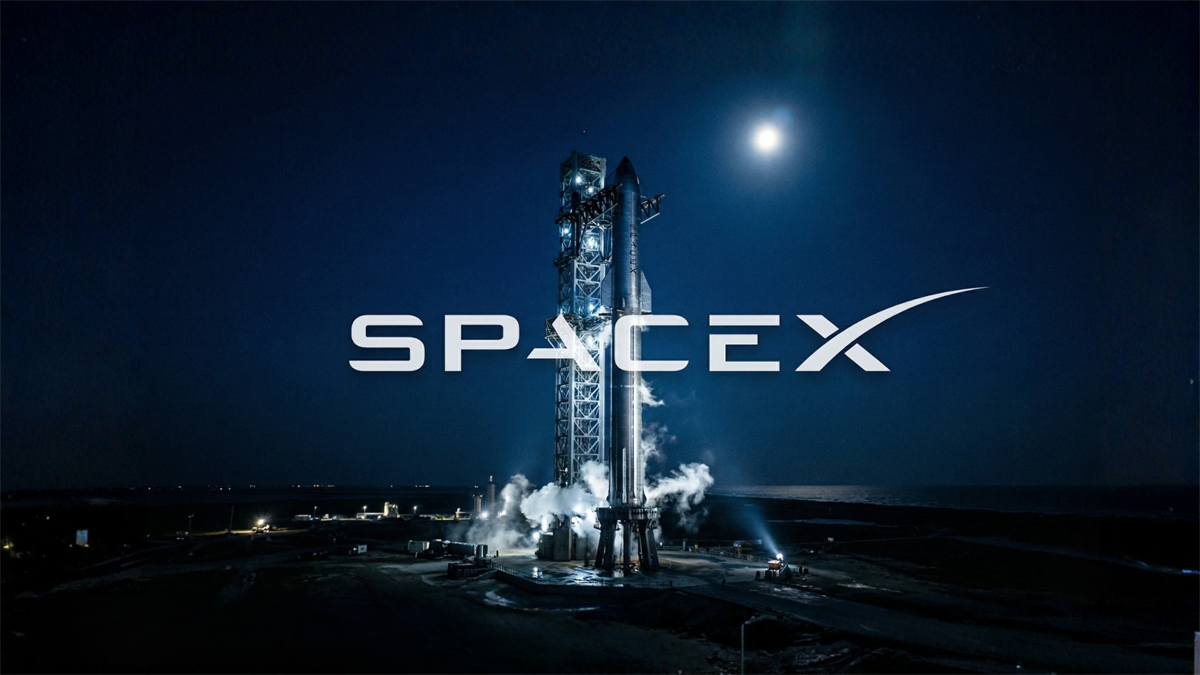
SpaceX officially confirmed its IPO filing, with a Nasdaq debut expected as early as June 12, 2026. The company is seeking a valuation of $1.75 trillion — a number so large it would place SpaceX above most of the world’s sovereign wealth funds and within striking distance of the most valuable companies ever to trade publicly. Adding to the market pressure, OpenAI and Anthropic have also signalled their intentions to go public within the same calendar year. Crucially, none of these three companies has yet posted an annual profit.
For Jaspreet Bindra, this simultaneous rush of pre-profit, trillion-dollar technology companies toward public markets is not a sign of ecosystem maturity — it is a flashing amber light. The SpaceX IPO tech bubble investor risk becomes even more pronounced when viewed not as a single event, but as part of a broader wave of capital absorption that could reshape equity markets in the second half of 2026.
Jaspreet Bindra’s Core POV: Brilliant Technology, Broken Pricing
Bindra has long maintained a consistent intellectual position: transformative technology and rational investment are not the same thing, and the two must never be conflated. His take on the SpaceX IPO reflects this same disciplined dualism.
He readily accepts the reality of SpaceX’s operational brilliance. Starlink, the company’s satellite internet division, generated $4.4 billion in operating profit in 2025 and had 10.3 million subscribers by Q1 2026. SpaceX commands the majority of global orbital launch capacity, has pioneered reusable rocket technology, and has built what is arguably the most consequential private aerospace programme in human history. These are not the hallmarks of a company built on hot air.
However, Bindra is unambiguous about where the SpaceX IPO tech bubble investor risk crystallises: in the gap between Starlink’s verifiable cash flows and the speculative narrative underpinning the rest of the $1.75 trillion price tag. The valuation asks investors to simultaneously price in orbital data centres, Starship-powered Mars colonisation, and AI infrastructure dominance — none of which exist as revenue-generating realities today. When a company’s pricing demands that investors buy three unproven futures at once, Bindra argues, the distance between ambition and accountability becomes dangerously wide.
The Dot-Com Parallel: A Warning from History
One of the pillars of Bindra’s analytical framework is a deep respect for technological history — and the current moment around the SpaceX IPO carries echoes he finds uncomfortably familiar. In the late 1990s, the internet was a genuinely revolutionary technology, and yet its promise was monetised into a bubble that wiped out trillions of dollars in investor wealth when reality finally caught up with narrative. The lesson was never that the internet was a bad idea — it was that paying any price for a transformative technology, at any stage of its maturity, is a recipe for financial pain.
Bindra draws the same line around SpaceX. The company is not a fraud. It is not vaporware. But at $1.75 trillion, investors are not paying for what SpaceX has built — they are paying, in full and upfront, for everything SpaceX hopes to build across the next several decades. Several market strategists have already flagged this same concern, describing the IPO’s energy as carrying a “dot-com bro” feeling, with enthusiasm disconnected from near-term financial fundamentals. The SpaceX IPO tech bubble investor risk, in Bindra’s framing, is not hypothetical — it is structural.
Key Person Risk: The Musk Multiplier
Among Bindra’s most pointed observations is the acute concentration of risk around Elon Musk as an individual. SpaceX’s strategic vision, brand identity, and investor appeal are inseparably tied to Musk — and that dependency does not dissolve the moment the company begins trading publicly. Musk simultaneously leads Tesla, xAI, X (formerly Twitter), and his government advisory role through DOGE. Each of these roles carries distinct reputational, legal, and operational risks that have the potential to spill over into SpaceX’s public market performance.
Bindra, whose expertise in responsible AI and ethical technology governance makes him acutely sensitive to organisational resilience, views this single-point-of-failure dynamic as a risk that prospectus documents rarely capture adequately. A bet on SpaceX at IPO is, unavoidably, a concentrated personal bet on one individual’s continued focus, public reputation, and capacity to execute across multiple massive simultaneous undertakings.
The “Holy Trinity” Problem: What Three Mega-IPOs Do to Markets
Bindra’s concern stretches beyond SpaceX in isolation. The near-simultaneous arrival of SpaceX, OpenAI, and Anthropic on public markets — collectively capable of absorbing hundreds of billions of dollars in the second half of 2026 — presents a systemic liquidity challenge that has no modern precedent. Capital flowing into these mega-listings must come from somewhere, and the most likely source is the broader equity market. This creates a crowding-out effect that could suppress performance across less hyped, more fundamentals-driven companies.
For Bindra, who has consistently advocated for technology investment that creates broad-based economic value rather than concentrating wealth within a narrow cluster of Silicon Valley giants, this pipeline of trillion-dollar listings is a moment requiring structural scepticism, not speculative enthusiasm.
What Bindra Recommends: Three Principles for Rational Investors
Rather than a blunt “buy” or “avoid,” Bindra’s guidance reflects the measured, evidence-first approach that characterises his broader philosophy. He acknowledges that a correction in AI and tech valuations is probable — but not a systemic collapse. The underlying technology is real, Starlink’s cash flows are genuine, and the long-term case for the space economy has merit. What is irrational is not the company — it is the price.
His counsel to investors navigating the SpaceX IPO tech bubble investor risk can be distilled into three clear principles:
1. Separate the technology from the entry price. SpaceX is an exceptional company. But greatness at any valuation is not an investment strategy — it is a leap of faith dressed in a spreadsheet. At $1.75 trillion, you are not uncovering opportunity; you are paying a premium for someone else’s vision of the future.
2. Know precisely what you are buying. Starlink’s operating profits are real and growing. The orbital data centres, AI infrastructure plays, and Mars economy are projections. Before investing, every buyer should be able to clearly identify what percentage of their investment is backed by current cash flows and what percentage is a bet on speculative narratives.
3. Time and patience are legitimate strategies. Some of the most disciplined investors have signalled they would rather wait for the initial IPO frenzy to subside and revisit the stock at a more rational valuation. Missing the first-day pop is not failure — it is often the price of avoiding the first-year crash.
The Bigger Picture: Rationality as a Competitive Advantage
For Jaspreet Bindra, the SpaceX IPO tech bubble investor risk is ultimately a proxy for a much larger challenge: how do investors stay rational, evidence-driven, and disciplined in an era that rewards narrative over fundamentals? His view, consistent across every public intervention he has made on the subject of AI and technology valuations, is that the technology is not the problem. The technology is extraordinary. It is the price — and the story attached to the price — that demands scrutiny.
SpaceX may, over decades, justify every dollar of its $1.75 trillion ambition. But investment decisions must be made in the present, with present information, at present prices. And in the present, the gap between what SpaceX has built and what investors are being asked to pay for remains the defining question — one that Jaspreet Bindra insists cannot be answered by pointing to rockets, satellites, or the sheer force of Elon Musk’s personality.
The stars may well be SpaceX’s destination. But for investors in 2026, the most important journey is the one from excitement back to evidence.