Introduction: The Question Every Indian Parent and Educator Is Asking
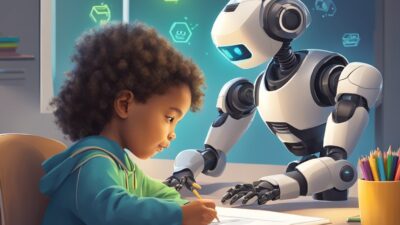
The rapid rise of AI in the Indian education system has fundamentally altered the way millions of students engage with learning — and not always for the better. Before a textbook is cracked open, a prompt is already typed into ChatGPT, Google Gemini, or any of the dozens of AI-powered homework helpers now embedded in every student’s daily routine.
What was once a clear boundary between studying and seeking help has dissolved, and the debate over where academic support ends and intellectual shortcuts begin is no longer a theoretical concern — it is playing out in real time, in classrooms from Mumbai to Meerut, from Delhi to Dibrugarh.Millions of Indian students today open their phones before they open their textbooks.
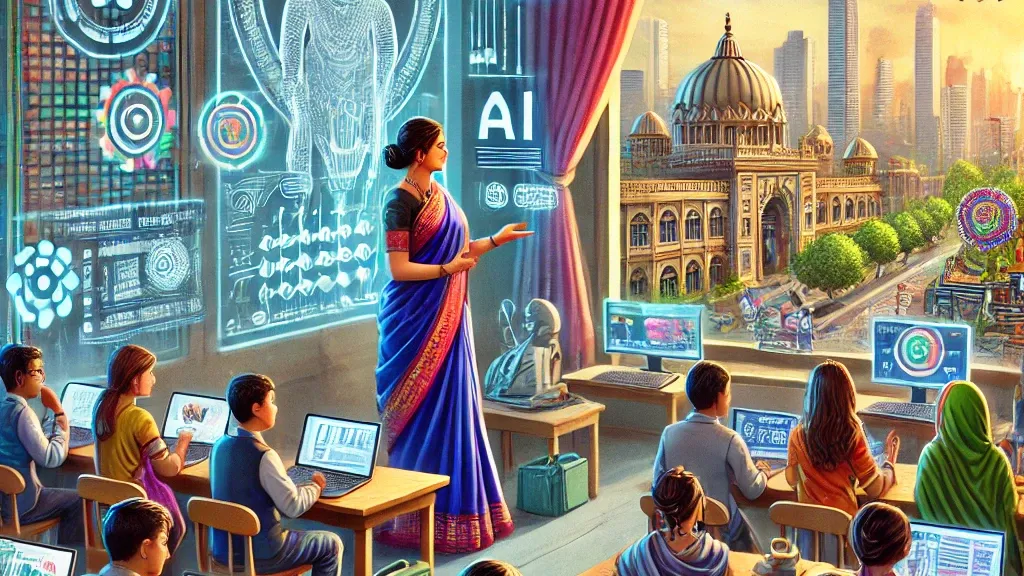
With AI-powered homework helpers like ChatGPT, Google Gemini, and a growing ecosystem of edtech tools at their fingertips, the lines between learning and outsourcing learning have blurred dramatically. The debate is no longer hypothetical — it is unfolding in classrooms from Mumbai to Meerut, from Delhi to Dibrugarh.
At the centre of this conversation is Jaspreet Bindra, Co-Founder and CEO of AI&Beyond, one of India’s most respected voices on artificial intelligence, digital transformation, and the future of education. His perspective on AI in the Indian education system is both urgent and nuanced — and it is reshaping the way educators, policymakers, and students think about learning in the age of AI.
Who Is Jaspreet Bindra?
Before diving into his views, it is worth understanding why Bindra’s opinion matters. A Cambridge-trained expert in AI, Ethics & Society, former Group Chief Digital Officer at Mahindra Group, and former Regional Director at Microsoft India, Bindra brings a rare combination of enterprise experience and academic rigour.
He is the author of multiple bestsellers including The Tech Whisperer and co-author of Winning with AI: A Guide to AI Literacy (2025). Most recently, he co-designed the YUVA AI for ALL course in partnership with the IndiaAI Mission (MeitY), which has already reached over 70 lakh learners across India — with a target of 1 crore.
In short, when Bindra speaks about AI in Indian education, he speaks from both the front lines of implementation and the intellectual high ground of ethics and policy.
The Core Tension: Academic Support vs. Shortcut Culture
The News18 article that sparked this discussion raises a critical question that Bindra has addressed across multiple forums: Are AI homework helpers genuinely supporting academic growth, or are they enabling a shortcut culture that hollows out real learning?
Bindra’s answer, characteristically, refuses to be simple.
He acknowledges that AI tools, when used correctly, offer unprecedented academic support — instant feedback, personalised explanations, and the ability to learn at one’s own pace. These benefits are real, particularly for students in Tier 2 and Tier 3 cities who do not have access to quality tutors or well-resourced schools. For such students, an AI homework helper can be a genuine equaliser.
However, Bindra is equally clear about the risk. When students use AI to get answers rather than to understand concepts, the technology becomes a crutch rather than a companion. The result, as he has warned, is what India’s education system has struggled with for decades — students who can produce correct outputs without possessing the thinking skills that generated them.
“Coding Is Optional. Thinking Is Essential.”
One of Bindra’s most widely quoted statements captures his educational philosophy perfectly: “Coding is optional. Thinking is essential.”
This is not a dismissal of technical skills. Rather, it reflects his belief that the most dangerous outcome of the AI age in education is not that students will use AI too much — it is that they will use it without judgment.
In his work with YUVA AI and AI&Beyond, Bindra has consistently argued that AI literacy is not about learning which buttons to press on ChatGPT. It is about understanding what AI can do, where it fails, and when to trust or question its output. Prompting, in his framework, is taught as structured thinking — not a parlour trick. Verification is a habit. Ethics is a responsibility.
Applied to the homework helper debate, his message is unambiguous: a student who uses AI to check their reasoning, explore alternate approaches, or deepen their understanding is engaging in legitimate academic support. A student who copies an AI-generated answer without reading it has not done homework — they have simply delegated it.
The Rote Learning Problem Predates AI
Bindra’s critique of shortcut culture in Indian education does not begin with AI. He has consistently pointed out that India’s education system has long been oriented towards rote memorisation rather than curiosity-driven learning. Examinations reward recall. Syllabi penalise exploration. Teachers are evaluated on pass percentages rather than the quality of inquiry they inspire.
In this context, AI homework helpers did not create a shortcut culture — they arrived into one that already existed. The real challenge, as Bindra frames it, is whether India will use the AI moment as an opportunity to reimagine learning or simply automate the existing, flawed model.
His vision is clear: “The real impact of AI in education will be when we move from rote learning to curiosity-driven learning.” That shift requires not just new tools but new intentions — from teachers, institutions, and students alike.
Concepts Over Tools: A Framework for the Future
One of the most distinctive aspects of Bindra’s thinking on AI in the Indian education system is his insistence on teaching concepts over tools. This is directly relevant to the homework helper debate.
Many AI literacy programmes — and many students using AI tools independently — focus entirely on the output: get the answer, submit the work, move on. Bindra argues this is precisely backwards. Tools will change rapidly. ChatGPT today will be replaced by something else tomorrow.
If a student’s entire relationship with AI is built around a specific platform’s interface, their knowledge becomes obsolete the moment that interface changes.
What endures, according to Bindra, is judgment — the ability to evaluate an AI’s output critically, to know when it is hallucinating, when it is biased, when it is simply wrong. This is the skill that academic institutions need to cultivate, and it is the skill that homework helpers, used thoughtlessly, most directly threaten.
What Should Indian Schools Actually Do?
Drawing from Bindra’s broader body of work and public statements, a practical framework emerges for how Indian schools can navigate the AI homework helper question:
1. Redesign Assessments If homework assignments can be completed entirely by an AI in thirty seconds, the assignment is not testing thinking — it is testing typing. Schools need to redesign assessments that require students to demonstrate process, not just product.
2. Teach AI Literacy as a Core Skill Students who understand how AI works — its strengths, its limitations, its ethical implications — are far less likely to misuse it. Bindra’s YUVA AI curriculum, which has scaled to 70 lakh learners, demonstrates that this kind of foundational AI education is both achievable and impactful at scale.
3. Encourage AI as a Thinking Partner, Not an Answer Machine Teachers can guide students to use AI tools the way a good mentor would — to ask better questions, to challenge assumptions, to explore multiple perspectives. This transforms the homework helper from a shortcut into a scaffold.
4. Prioritise Verification as a Habit Students should be taught, from an early age, to verify everything an AI tells them. This builds critical thinking, digital literacy, and epistemic responsibility simultaneously.
The Equity Dimension: AI Can Be an Equaliser — If We Let It
A dimension of the debate that Bindra brings to the foreground is equity. India’s education crisis is not uniform. A student in South Delhi with access to private tutors, well-stocked libraries, and engaged teachers faces a vastly different learning environment from a student in rural Uttar Pradesh with overcrowded classrooms and undertrained faculty.
For the latter student, a well-designed AI homework helper can be genuinely transformative — not a shortcut, but a lifeline. Bindra’s deliberate focus on scaling YUVA AI beyond metro cities reflects this conviction. India’s AI education opportunity, he has argued, lies in broad adoption, not elite penetration.
The risk, however, is that poorly designed or ungoverned AI tools amplify existing inequalities — providing richer, better-scaffolded learning experiences to students who already have strong foundations, while offering shortcut-prone interfaces to students who need conceptual support most.
This is why Bindra insists that the design of AI education tools matters as much as their availability.
Conclusion: Reimagining Learning Is Non-Negotiable
Jaspreet Bindra’s perspective on AI homework helpers and the Indian education system ultimately points to a deeper truth: technology is neutral; pedagogy is not. The same AI tool can deepen a student’s curiosity or short-circuit it entirely, depending on how it is introduced, how it is used, and what values surround its use.
India stands at a genuine inflection point. With 70 lakh learners already exposed to structured AI literacy through YUVA AI, with NEP 2020 pushing towards competency-based learning, and with a generation of students who have grown up with smartphones and will grow up with AI agents, the opportunity to get this right has never been greater.
But getting it right requires exactly the shift Bindra has spent his career advocating: from outputs to outcomes, from tools to thinking, from rote answers to real understanding.
The question is not whether AI belongs in Indian education. It does. The question is whether Indian education is ready to use AI the way it deserves to be used — not as a shortcut, but as a catalyst for the curious, thinking, judgment-capable learners that India needs.: will India choose to read it?