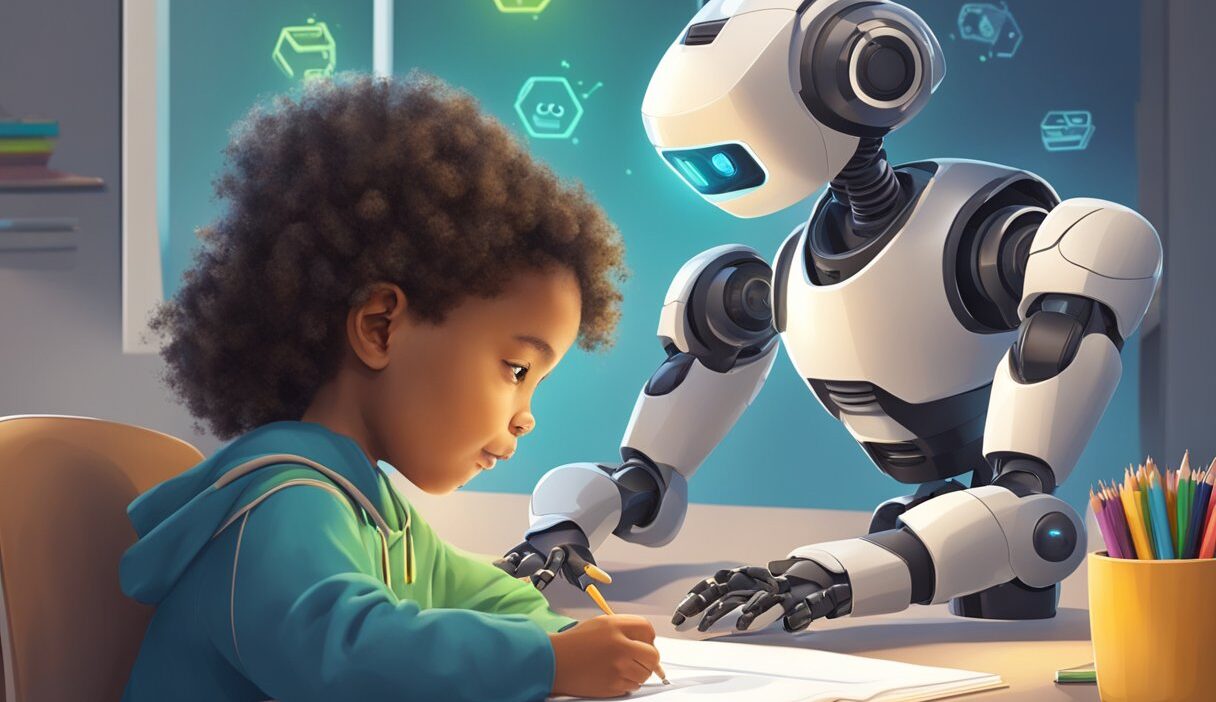
AI literacy in the Indian education system is no longer a future concern — it is the most urgent and most misread challenge facing students, teachers, and policymakers right now. Jaspreet Bindra, Co-Founder and CEO of AI&Beyond, stands at the centre of this conversation — not to sound the alarm, but to redirect it entirely.
While schools debate bans and parents lose sleep over shortcuts, Bindra is asking a sharper question: why are we reacting to a tool instead of building the wisdom to use it? His answer is not a defence of academic dishonesty. It is a call for structural change — and a reminder that the window to act is closing fast.
Students Are Already Using AI — The Debate Has Moved On
Bindra does not linger on whether students should be allowed to use AI. In his view, that question has already been answered by the students themselves. Across India’s schools and colleges, learners are already reaching for chatbots to break down difficult concepts, brainstorm project ideas, structure presentations, and in some cases produce entire assignment drafts.
This did not happen gradually — it happened almost overnight. Faster than syllabi could be updated, faster than teacher training could catch up, and faster than any policy framework could respond.
His argument is that this is not a discipline problem. It is a preparedness problem. The Indian education system was not equipped to welcome AI into the classroom because no one built the on-ramp. Bindra’s response — through AI&Beyond and the government-backed Yuva.ai platform developed in partnership with the Ministry of Electronics and Information Technology (MeitY) — has been to build that on-ramp deliberately, at scale, and from first principles.
The goal was never to ship another app. It was, as Bindra has described it, to create a national learning ecosystem — one that gives every Indian learner, from a school child in a small town to a shopkeeper in a rural district, a genuine understanding of what AI is, how it thinks, where it helps, and where it misleads.
The Line That Changes Everything: Coding Is Optional. Thinking Is Essential.
Bindra’s most widely cited observation — “Coding is optional. Thinking is essential” — does more work than it appears to. It dismantles a stubborn myth: that AI education is only for future engineers, and that everyone else can afford to stay on the sidelines.
When Bindra speaks about strengthening AI comprehension across India’s schools and colleges, he is not describing a Python course or a machine learning elective. He is describing the capacity to engage critically with intelligent systems — to know when an AI is confidently wrong, to interrogate its output rather than accept it, and to bring independent judgment to whatever an AI produces. This is the skill that will define career trajectories in the next decade, and it has nothing to do with whether a student can write code.
The shortcut culture narrative, in Bindra’s framing, puts the blame in entirely the wrong place. When a student submits AI-generated work without any original engagement, the root cause is not moral laziness — it is the absence of a taught framework for what responsible AI use actually looks like. Teach that framework, and the dynamic shifts. Students stop treating AI as an answer machine and start treating it as a thinking partner.
Why Equity Is at the Heart of This Conversation
One of the threads Bindra returns to most consistently is who gets left behind when AI understanding remains an elite concern. His advocacy for mobile-first platforms like Yuva.ai is not incidental — it reflects a deliberate stance that learning to work alongside AI in India cannot be confined to well-resourced urban schools with English-medium instruction.
For the vast majority of Indian students, the smartphone is the primary and often only connected device they have access to. If AI literacy programmes are designed for desktops, for English speakers, or for learners who already have strong foundational digital skills, they will replicate the same inequalities that have defined technology adoption in India for decades.
Bindra’s vision insists on a single learning philosophy with multiple pathways. A student in Class 8 in Punjab focuses on understanding what AI is and how to use it safely. A college student in Hyderabad explores how to apply it in their field. A first-generation entrepreneur in a tier-3 city learns how AI can improve customer communication or inventory management. The technology is the same. The entry points are different. And that distinction matters enormously if the goal is inclusion rather than acceleration of existing privilege.
The Risk India Is Not Talking About Enough
The loudest concern in public discourse is that AI will make students intellectually passive. Bindra acknowledges this risk — but he identifies a far larger one that is being almost entirely ignored: a generation of young Indians entering an AI-saturated workforce with no preparation whatsoever for what they will find there.
Medicine, law, journalism, marketing, teaching, logistics, retail — every sector is already being reshaped by AI-assisted workflows. The professionals who thrive will not necessarily be those who built the tools. They will be those who know how to work alongside them, evaluate their outputs critically, and apply human judgment where it matters most. The professionals who struggle will be those who were never taught to engage with these systems at all.
India cannot afford to produce the second group at scale. The country’s demographic advantage — the sheer number of young people entering the workforce over the next two decades — becomes a liability rather than an asset if that workforce is unprepared for an AI-first world.
What Schools and Policymakers Must Do Differently
Bindra is clear-eyed about the responsibilities that fall on institutions, not just individuals. Educators need to stop designing assessments that AI can trivially complete, and start designing assessments that require the kind of synthesis, reflection, and original argument that AI cannot replicate. This is not about making exams harder. It is about making them more honest about what skills actually matter.
Beyond assessment design, Bindra points to a deeper cultural shift that schools must make: moving away from treating AI as an external threat to be blocked, and toward treating it as a capability to be understood and governed. Ethics, bias, privacy, and verification are not add-ons to an AI curriculum. They are the curriculum.
The Bottom Line
Jaspreet Bindra’s perspective on AI homework helpers and the broader project of embedding AI literacy in the Indian education system refuses the comfort of simple conclusions. He does not say AI in classrooms is harmless. He does not say it is dangerous. He says it is inevitable — and that the only responsible response is deliberate, inclusive, and ethics-grounded preparation.
India has shown, repeatedly, that it can achieve digital adoption at a scale the world does not expect. The next chapter is AI readiness — not for a select few, but for the student in Amritsar, the graduate in Patna, and the young entrepreneur in Coimbatore. If that chapter is written well, India’s next generation will not just be ready for an AI-first world. They will help build it.
Key Points Summary — Jaspreet Bindra’s POV
- AI literacy in the Indian education system is the missing infrastructure — not bans or panic
- Students are already using AI — the real question is whether they are prepared to do so responsibly
- Coding is optional; thinking is essential — AI literacy is about critical judgment, not technical skills
- Shortcut culture is a symptom of absent frameworks, not a reason to block AI entirely
- Equity is non-negotiable — AI education must be mobile-first and accessible beyond metro cities
- The bigger risk is not over-use — it is an entire generation entering the workforce AI-illiterate
- Assessments must evolve to demand higher-order thinking that AI alone cannot produce
- Ethics, privacy, and bias awareness are core to any meaningful AI literacy curriculum