
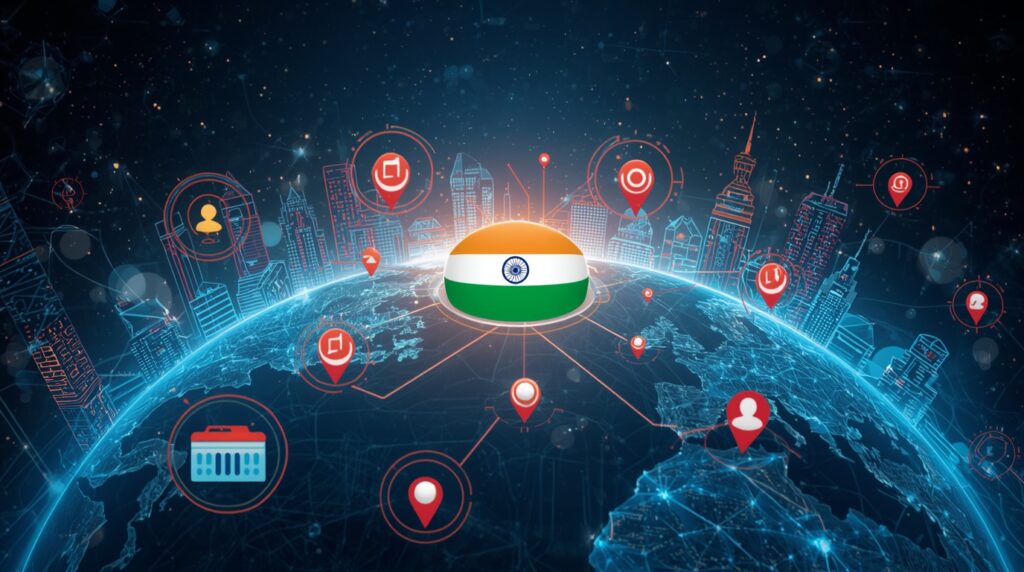
India Physical AI outsourcing is no longer a futuristic concept — it is fast becoming the defining next chapter of the country’s technology story. India earned its global reputation through two powerful waves: IT services in the late 1990s and Business Process Outsourcing in the 2000s. KPO followed, and then Global Capability Centers turned India into a strategic nerve centre for the world’s largest multinationals. Now a new wave is gathering force — one that involves training robots rather than processing payroll or writing code. At the centre of this conversation is Jaspreet Bindra, founder of AI advisory firm AI&Beyond India and Tech Whisperer Limited UK, and one of the most incisive voices unpacking what this shift truly demands of India.
What Is Physical AI — And Why Does It Matter for India?
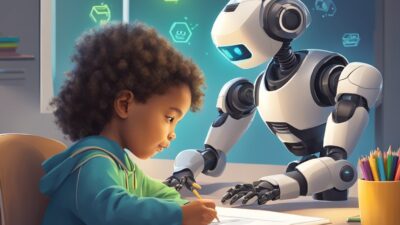
Physical AI refers to AI systems that don’t just process text or generate images — they perceive and interact with the real, physical world. Think humanoid robots, warehouse automation systems, autonomous drones, and smart factory machines. Unlike generative AI, which thrives on digital data, physical AI requires something fundamentally different: real-world data about movement, human behaviour, object interaction, environmental conditions, and unpredictable workflows.
Robots, as Bindra and other experts note, cannot learn entirely inside simulations. They need to be exposed to the messy, unpredictable reality of Indian homes, factories, farms, and warehouses. This creates a data problem — and potentially, a massive Indian opportunity.
Jaspreet Bindra’s Core Argument: Don’t Just Collect Data, Own the Stack
Bindra’s perspective on India’s Physical AI outsourcing opportunity is nuanced and carries a sharp warning: don’t repeat the BPO trap.
His central argument, as quoted in a June 2026 Business Standard analysis, is that “the premium value sits in full-stack robotics-data services and simulation-ready datasets. The real margins belong to companies that can ingest raw footage, curate edge cases, synthetically augment the data, and deliver structured environments that directly train autonomous systems.”
This is a critical distinction. India’s traditional outsourcing story was built on labour arbitrage — cheaper human hands doing the same work at lower cost. But Bindra is pointing to a different future for India’s Physical AI outsourcing ambitions. The value, he argues, is not in being the world’s cheapest video-footage supplier. It’s in climbing the value chain: building annotation pipelines, synthetic data augmentation capabilities, compliance infrastructure, simulation environments, and domain-specific datasets that robotics companies genuinely cannot build at scale on their own.
Why Physical AI Data Is Different — and More Complex
One of Bindra’s key insights is that physical AI data is not like traditional data labelling. This is not about tagging cats in images or transcribing audio. Physical AI demands complex multimodal data — sensor feeds, LiDAR scans, motion-capture recordings, environmental audio, and annotated human action sequences, all synchronised and structured to train embodied AI systems.
Bindra argues this complexity is precisely what makes the India Physical AI outsourcing opportunity a legitimate, large-scale category — not just a niche service. Because the data requirements are so demanding and so varied, the services required go well beyond basic annotation into engineering, governance, simulation design, and AI validation.
This puts India in an interesting position. The country’s decades of IT services experience — process management, quality assurance, security compliance, and offshore delivery — can be directly repurposed for physical AI. The capabilities are already there. What’s needed is the ambition to move upstream.
On Jobs: Bindra Is Cautiously Optimistic
Physical AI inevitably invites a hard question: what happens to India’s enormous blue-collar workforce when robots start doing warehouse sorting, assembly-line work, and commercial cleaning?
Bindra’s take is measured but ultimately optimistic in the near term. He believes physical AI could create more jobs than it eliminates in India, at least initially. His reasoning is grounded in economic reality — India’s labour costs are still low enough that full automation of blue-collar roles will be a slow process.
However, he is clear that the transition is not painless. “True displacement in India’s blue-collar sector will be slow due to low labour costs. However, repetitive warehouse sorting, structured assembly-line roles, and predictable commercial cleaning will be transformed first,” he says.
This framing matters. Bindra is not dismissing the disruption — he is contextualising it within India’s specific economic landscape. The window of time before significant automation-driven displacement is a window India should use to build skills, infrastructure, and IP in the physical AI services space.
The Value Chain: Where India Must Position Itself
Bindra’s analysis of the physical AI value chain is particularly sharp. At the bottom sit households, gig workers, and factory operators generating raw footage. Above them are data cleaning and annotation startups. Higher still are companies building compliance systems, quality assurance layers, simulation environments, and governance frameworks. At the top sit the global robotics companies and cloud providers.
India currently has players across this chain. But Bindra’s message is unambiguous: the real prize is in the upper layers, not in raw data collection. Countries or companies that only supply footage risk being commoditised quickly, especially as global robotics labs increasingly turn to synthetic data — cleaner, cheaper, and infinitely scalable.
The lesson from India’s IT journey applies directly here. The most successful Indian IT companies did not stay in basic coding and support. They moved into consulting, platforms, and intellectual property. Physical AI services must follow the same trajectory.
What India Needs to Get Right
Bindra’s overall vision implies a clear action agenda for India:
- Move beyond footage collection into simulation-ready datasets and synthetic data augmentation.
- Build compliance and governance infrastructure that gives global robotics companies confidence in the legal integrity and technical reliability of Indian datasets.
- Invest in robotics engineering and validation capabilities, not just annotation pipelines.
- Create domain-specific datasets for healthcare robotics, agricultural automation, warehouse systems, and domestic robots — leveraging India’s extraordinary diversity of real-world environments.
- Treat privacy seriously from day one, unlike the internet era’s “collect first, regulate later” approach.
The Bottom Line
Jaspreet Bindra’s perspective on India’s Physical AI outsourcing moment is both exciting and cautionary. The opportunity is real — India’s diverse environments, large skilled workforce, and deep IT services heritage create a genuinely compelling proposition for global robotics companies. But the prize will not go to those who simply supply cheap footage.
The winners, Bindra argues, will be those who own the full stack: the data, the compliance, the simulation, the governance, and the deployment infrastructure. India has done this before — moving from commodity outsourcing to strategic technology partner. The question is whether the country’s entrepreneurs, investors, and policymakers are ready to make the same move again, this time for the age of physical AI.