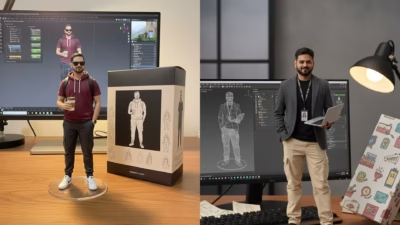

At AI and Beyond, this week’s featured capability is Perplexity AI Patent Search, and Anuj‘s perspective on it cuts straight to a problem most R&D teams know too well. As he points out, the same pattern repeats across innovation groups: talented people invest months building something, only to discover a near-identical patent sitting in a database they never knew how to search properly. That, in Anuj’s view, is the real problem this tool solves.
His core argument is simple. Prior-art discovery has historically been gated by expertise. Traditional patent databases demand Boolean strings, exact classifications, and a working knowledge of IP jargon. If you don’t speak that language, Anuj notes, you either pay a specialist or you guess. Perplexity AI Patent Search removes that gate by letting teams ask plain-language questions and getting back relevant patents with titles, assignees, publication dates, and direct links. For the first time, he argues, a product manager or engineer can explore the landscape without a law degree.
What genuinely impresses Anuj is the shift from searching to understanding. Anyone can pull a list of patents; the harder task is making sense of them. With Perplexity AI Patent Search, he explains, you can start broad — “Are there patents on AI-driven quality control in manufacturing?” — then refine toward something specific like vision-based defect detection for automotive parts. From there, teams can group results by assignee, summarize claimed approaches across ten filings, or highlight what appears less frequently. That last move, Anuj believes, is where the most value lies: spotting whitespace. Crowded clusters show where everyone is fighting; thin areas hint at where there may still be room to build something defensible.
He also appreciates that the tool recognizes a patent-oriented query automatically and activates the right retrieval without forcing users to switch modes. A small detail, Anuj admits, but friction is the enemy of adoption. The easier a tool is to reach for, the more often teams actually validate before they invest — and validating early, he stresses, is the whole point.
Anuj is equally clear about the caveat he shares with every team he advises: Perplexity AI Patent Search is a research assistant, not a legal opinion. It dramatically speeds up the front end of innovation — idea validation, landscape mapping, competitive awareness — but it does not replace a qualified patent attorney or a formal freedom-to-operate search. He frames it as the tool that helps teams arrive at their IP counsel already informed, not the one that signs off on filing decisions.
His takeaway, as AI and Beyond reads it, is this: the cost of not checking the prior-art landscape has always been high — wasted months, legal exposure, abandoned projects. Perplexity AI Patent Search lowers that cost to almost nothing. And when validation becomes that cheap and fast, Anuj argues, there’s no excuse to skip it. The teams that win won’t be the ones with the most ideas; they’ll be the ones who pressure-test ideas against reality earliest.