
Every product marketer knows the sinking feeling of receiving a one-line creative brief from leadership and being expected to turn it into something a designer, a CMO, and a sales lead can all rally behind. According to Anuj, this is exactly where Google Mixboard changes the game. In his view, Google Mixboard is not just another AI toy — it is a practical answer to the single most expensive bottleneck in campaign development: the gap between an abstract idea and a visual everyone can actually see. Anuj’s POV is simple but pointed. Marketers don’t lose days because they lack ideas; they lose days because they cannot make those ideas visible fast enough. And in his experience, Google Mixboard collapses that timeline from days into minutes.
This article breaks down Anuj’s perspective on why Google Mixboard matters, where he believes it delivers the most value, and how he recommends marketing teams put it to work.
Anuj’s Core Argument: The Problem Was Never Creativity
Anuj opens his take with a reframe. The industry loves to talk about “creative blocks,” but he argues the real tax on marketing teams is translation. A leadership team hands down a theme — “Festival of Flavors,” “Heritage Meets Modern,” “Minimalist Luxury” — and the marketer becomes a middleman, hunting stock photos, begging designers for rough mockups, and stitching together mood boards that never quite land.
“The brief was never the problem,” Anuj points out. “The problem is that ‘Heritage Meets Modern’ means five different things to five different people in the room. Until someone can see it, every approval meeting is just opinions colliding.” This, he says, is what produces the dreaded “I’m not feeling it” feedback and the endless revision loops that follow. In Anuj’s reading, Google Mixboard attacks the root cause: it gives everyone the same picture to react to, early, before budgets and calendars are committed.
Why Anuj Rates Google Mixboard So Highly
Anuj’s enthusiasm for Google Mixboard rests on three practical pillars he keeps returning to.
1. Speed of execution. For Anuj, the headline benefit is velocity. He describes Google Mixboard as a way to turn a single-line campaign theme into a full visual direction in under thirty minutes. That speed isn’t a vanity metric — it directly shortens the runway between strategy and shipped creative. “When you can generate a visual direction in the same meeting where the brief is born,” he says, “you stop scheduling three follow-ups to align on vibe.”
2. Stakeholder alignment. This is where Anuj is most emphatic. He argues that Google Mixboard’s biggest unlock isn’t the imagery itself — it’s the agreement the imagery creates. By producing a living, remixable board, marketing, design, and leadership can all point at the exact look and feel they want and, just as importantly, the parts they don’t. Anuj calls this “moving the argument earlier,” and he believes it’s where the real time savings live.
3. Skipping the stock-photo grind. Anuj has little patience for the hours marketers sink into stock libraries that never quite match the brand. With Google Mixboard, he notes, teams can generate on-brand lifestyle shots, product mockups, and color stories using natural language alone — no design skills, no stock-site subscriptions, no compromise on the vibe.
How Anuj Recommends Using Google Mixboard
Anuj is at his most useful when he walks through a real scenario, so consider the example he likes to use: a CMO wants a new sustainable water bottle launch to feel “Traditional yet contemporary — Himalayan adventure meets urban India hydration.”
Here’s the workflow Anuj endorses inside Google Mixboard:
- Start with a vivid prompt. Open Google Mixboard, create a new project, and describe the world in plain language: “Himalayan trekking campaign for a sustainable water bottle, earthy saffron and turquoise tones, diverse Indian adventurers aged 25–40, candid moments, natural photography style.”
- Bring your own product. Upload your real product images so the board reflects the actual SKU, not a generic placeholder.
- Direct the scene with a custom prompt. Anuj leans on Google Mixboard’s natural-language control here: “Place the bottle naturally in every scene, matte texture, golden-hour light, add subtle motivational text overlays in English and Hindi.”
- Curate ruthlessly. Delete anything that drifts from the theme. Anuj treats this pruning step as essential — a board is only as aligned as the weakest image you leave on it.
- Transform and extend. Push the board further with a prompt that explores the why of the campaign — in this case, the psychology of high-altitude trekking, spiritual reflection, and the sense of accomplishment that maps onto the brand’s positioning.
In under thirty minutes, Anuj notes, a vague brief becomes a compelling visual narrative the whole team can react to.
The Features Anuj Singles Out
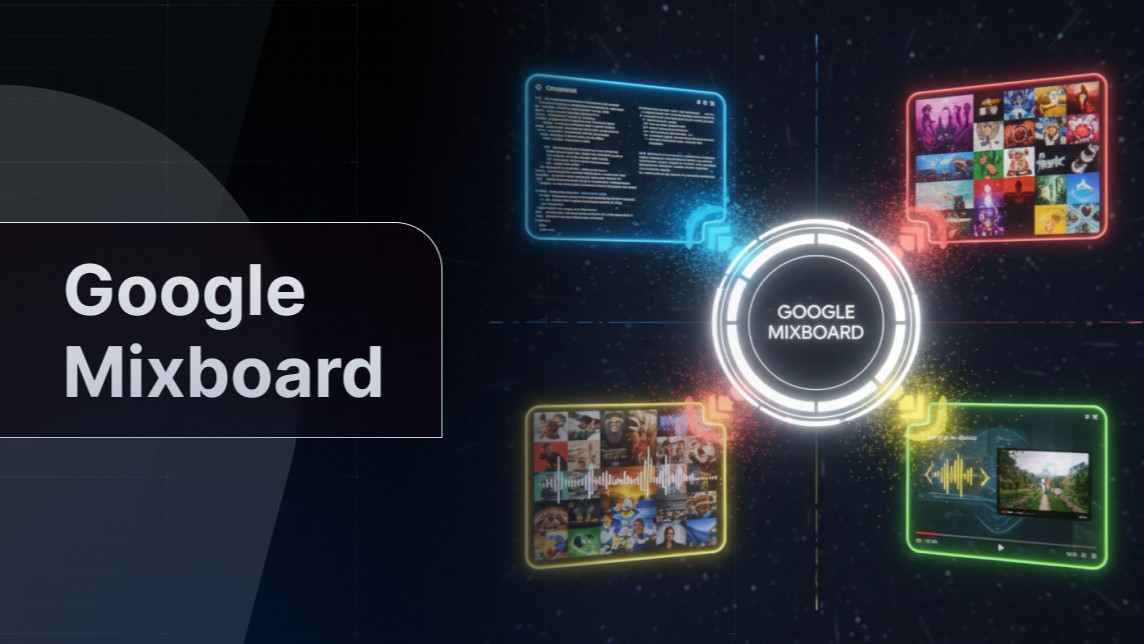
When asked what makes Google Mixboard special, Anuj points to a few capabilities he considers genuinely differentiated. The Custom Prompt plus Nano Banana editing gives board-wide control through natural language — instructions like “make every bottle look dewy from monsoon rain” or “add a chai-stall backdrop with morning light” are executed across the whole board, not one image at a time. He also highlights real-time collaboration with one-click Slides export, which takes a fuzzy idea to a stakeholder-approved direction inside a single shareable link. And he never forgets to mention the obvious: while it’s in Labs, Google Mixboard is completely free — which, in his words, makes “not testing it” the harder decision to defend.
Anuj’s Bottom Line
Anuj’s closing POV is measured but clear. He doesn’t claim Google Mixboard replaces designers or strategists; he claims it removes the friction that keeps them from doing their best work. The tool, in his framing, is a translation layer — turning the language of leadership into the language of visuals so the whole team argues about the right things, earlier, when changes are cheap. For any product marketer tired of the vague-to-visual gap, Anuj’s recommendation is unambiguous: open Google Mixboard, feed it your next one-line brief, and watch the alignment problem shrink. The teams that adopt tools like this now, he believes, will simply move faster than the ones still waiting on the next mood-board revision.
For more AI literacy contact us at: https://aiandbeyond.ai/contact.html